
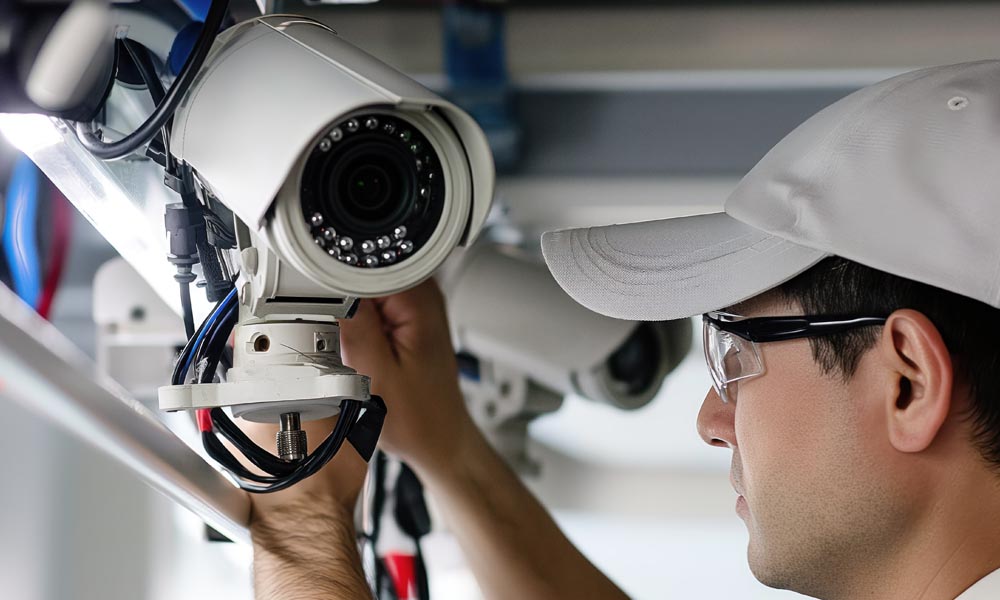
Commercial installation of CCTV systems involves a structured approach to improving security for businesses and public spaces. It starts with a site assessment to identify vulnerabilities and determine optimal camera placements. Professionals collaborate with clients during a pre-installation consultation to clarify specific security needs. Cameras are then strategically positioned to monitor key areas such as entrances and parking lots. The installation includes reliable storage solutions for recorded footage, either local or cloud-based. Compliance with legal regulations ensures adherence to privacy and data protection laws. Finally, ongoing maintenance and support are arranged to maintain the system’s effectiveness and longevity, providing businesses with secure premises

A site assessment involves a detailed evaluation of the premises to determine security needs. This process includes identifying high-risk areas, potential blind spots, and the overall layout of the property. Factors such as lighting conditions, existing security measures, and the types of activities taking place are considered to create a comprehensive security plan.
During a pre-installation consultation, security professionals discuss the specific requirements and concerns of the client. This meeting helps clarify objectives, determine budget constraints, and outline the features necessary for the CCTV system. The goal is to ensure that the system will effectively address the unique security challenges faced by the property.
Optimal camera placement is crucial for maximizing surveillance coverage. This involves strategically positioning cameras to monitor key areas such as entrances and exits, parking lots, and other vulnerable spots. Considerations include the camera's field of view, height, and angle to ensure comprehensive visibility and minimize blind spots.
Choosing the right storage solution is essential for managing recorded footage. Options include local storage systems like Digital Video Recorders (DVRs) or Network Video Recorders (NVRs), as well as cloud-based storage that allows for remote access and easy scalability. The choice depends on factors like the amount of footage to be stored, budget, and accessibility needs.
Compliance with local laws and regulations regarding surveillance is critical. This includes understanding privacy laws, data protection regulations, and any specific requirements for signage or notification. Adhering to these regulations helps avoid legal issues and ensures ethical use of surveillance technology.
Regular maintenance and support are vital for the long-term effectiveness of a CCTV system. This includes routine check-ups, software updates, and troubleshooting any issues that arise. Establishing a maintenance plan ensures that the system remains operational and continues to meet security needs over time.